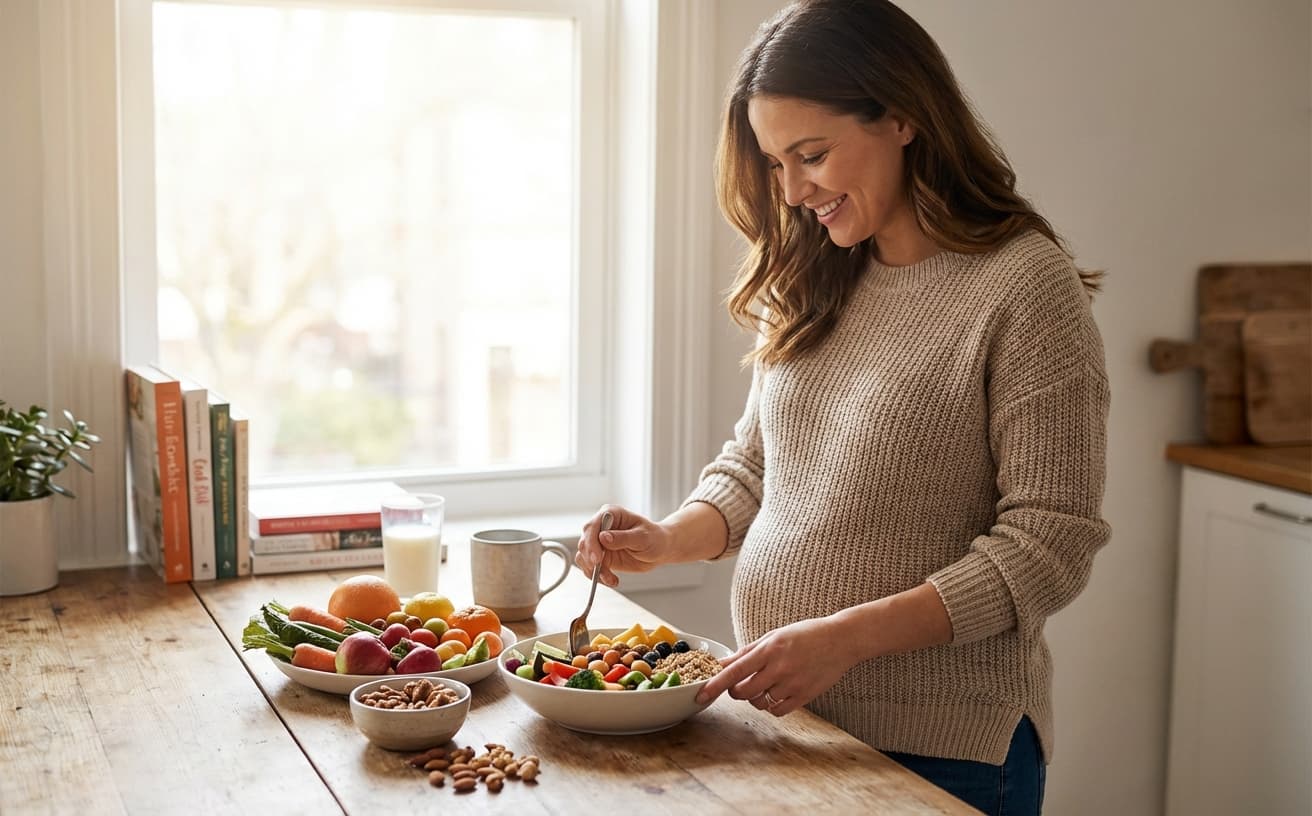
Foods to Eat During First Trimester: Your Complete Nutrition Guide

Why the First Trimester Is All About Quality, Not Quantity
Here's something that surprises a lot of newly pregnant people: during the first 12 weeks, you actually don't need any extra calories. That's right — the "eating for two" idea doesn't kick in right away. What matters far more is the quality and diversity of the food you're eating.
Your baby is forming their brain, heart, spine, and organs at a breathtaking pace during these early weeks. The foods to eat during first trimester are the ones packed with the specific vitamins and minerals that support all of that rapid growth. Think of your plate as a daily investment in your baby's health.
The good news? You don't need a complicated meal plan. Focusing on a few key food groups — plenty of fruits, vegetables, whole grains, lean protein, and healthy fats — can make a huge difference. Let's break down exactly what to reach for and why.
Leafy Greens: The First Trimester's Best Friend
If there's one food group that earns a gold star for early pregnancy, it's leafy greens. Spinach, kale, turnip greens, and swiss chard are packed with fiber, folate, and antioxidants — a trifecta your body is desperately craving right now.
Kale, in particular, is something of a nutritional overachiever. A single serving delivers fiber, calcium, folate, iron, and vitamins A, C, E, and K. That's a lot of heavy lifting from one humble vegetable.
Why Folate Is Non-Negotiable
Folate — also known as folic acid in its synthetic form — is one of the most critical nutrients during early pregnancy. Getting enough of it may help reduce the risk of neural tube defects, which affect the baby's brain and spinal cord. Most of your baby's neural tube development happens in the first few weeks, often before many people even know they're pregnant.
Leafy greens are one of the best natural sources of folate you can find. Add them to smoothies, sauté them with olive oil and garlic, or toss them into a grain bowl. The more creative you get, the easier it is to hit your daily goals.
Legumes and Beans: A Plant-Based Powerhouse
If you're looking for foods to eat during first trimester that pull double duty, legumes and beans deserve a permanent spot on your grocery list. Lentils, chickpeas, black beans, and kidney beans are rich in both folate and plant-based iron — two nutrients that are in especially high demand during pregnancy.
Here's a number worth knowing: just one cup of cooked lentils provides roughly half your daily folate requirement. That's remarkable for a single serving of food. Pair lentils with a vitamin C-rich food (like tomatoes or bell peppers) and your body absorbs even more of that plant-based iron.
Getting Creative With Legumes
Not a bean lover? You might be surprised how easy it is to sneak them in. Try these ideas:
- Blend white beans into a creamy pasta sauce
- Add lentils to soups, stews, or chili
- Mash chickpeas into a sandwich spread with lemon and olive oil
- Stir black beans into scrambled eggs or a breakfast burrito
For more ideas on building a nutrient-dense diet, check out our guides on nutrition and pregnancy wellness.
Lean Meats: Protein and Iron in One Package
Lean meats like chicken, turkey, and lean cuts of beef are among the most efficient foods to eat during first trimester for hitting your protein and iron goals. Protein supplies the essential amino acids your baby needs to build cells, tissues, and organs. Iron supports healthy blood production for both you and your growing baby.
During pregnancy, your blood volume increases significantly — which means your iron needs go up too. Getting enough iron from food sources like lean meat can help you stay energized and support your baby's overall development.
How to Make Lean Meats Work for You
If meat aversions are hitting hard (a very common first trimester experience), try these gentler approaches:
- Cold chicken in a salad — sometimes cold proteins are more tolerable than hot ones
- Ground turkey blended into tomato sauce over pasta
- Mild beef or chicken broth as a warm, sippable snack
Always make sure meat is cooked to a safe internal temperature during pregnancy. Skip deli meats and raw or undercooked proteins entirely.
Low-Mercury Fish: Brain Food for Your Baby
Fish often gets a complicated reputation during pregnancy, but when you choose wisely, it's one of the most beneficial foods to eat during first trimester. Low-mercury options like salmon, sardines, trout, and shrimp supply omega-3 fatty acids — especially DHA, a type of fat that supports your baby's heart health, brain development, and eyesight.
DHA is particularly important during early brain formation, making it a nutrient worth prioritizing in these first weeks. Many prenatal vitamins include DHA, but getting it from food adds even more benefit.
The Low-Mercury Fish List
The FDA recommends pregnant people eat 2-3 servings of low-mercury fish per week. Some of the best choices include:
- Salmon (fresh, frozen, or canned)
- Shrimp
- Sardines
- Trout
- Canned light tuna (in moderation)
Fish to avoid include shark, swordfish, king mackerel, and tilefish, which are high in mercury. When in doubt, your healthcare provider can help you navigate the best choices for your specific situation.
Eggs and Dairy: Don't Overlook Choline
Choline might not get the same press as folate or iron, but it's a critical nutrient for brain development — and most people don't get enough of it. Foods rich in choline include eggs, low-fat dairy, lean meats, seafood, beans, and lentils. As you can see, there's a lot of overlap with other first trimester superstars, which makes building a choline-rich diet easier than it sounds.
Eggs are especially worth highlighting here. One egg delivers a meaningful dose of choline along with high-quality protein, healthy fats, and a range of vitamins. They're also quick to prepare, which matters a lot when nausea or fatigue is making cooking feel like a marathon.
Low-Fat Dairy: Calcium and More
Low-fat dairy — think Greek yogurt, milk, and cottage cheese — delivers calcium, protein, and choline in one convenient package. Calcium is essential for building your baby's bones and teeth, and getting enough of it protects your own bone density too.
Aim for about 3 cups of dairy per day during pregnancy. If you're dairy-free, look for fortified plant-based alternatives like almond or oat milk, and talk to your provider about calcium supplementation.
Avocados: The Pregnancy Superfood You Actually Want to Eat
Avocados have earned their hype, and they're especially valuable as a food to eat during first trimester. They contain more potassium than bananas, which can help ease leg cramps — a common pregnancy complaint. They also supply vitamins B, K, C, and E, along with fiber and healthy monounsaturated fatty acids.
Those monounsaturated fats are particularly valuable because they help your body absorb fat-soluble vitamins like A, D, E, and K. In other words, pairing avocado with other nutrient-rich foods actually makes those foods work harder for you.
Easy Ways to Add More Avocado
- Spread on whole grain toast with a squeeze of lemon
- Slice into salads or grain bowls
- Blend into a smoothie for a creamy, mild flavor boost
- Mash into guacamole with tomatoes and lime
For more on healthy fats and their role in overall wellness, explore our nutrition resources.
Whole Grains and Fruits: Rounding Out Your Plate
A well-rounded first trimester diet includes plenty of whole grains and fruits too. Whole grains — like oats, quinoa, brown rice, and whole wheat bread — provide sustained energy, fiber, and B vitamins. They're especially helpful if you're battling nausea, since bland carbohydrates are often more tolerable when your stomach is sensitive.
Fruits bring natural sugars, hydration, vitamin C, and antioxidants to the table. Citrus fruits, berries, mangoes, and melons are all excellent choices. Vitamin C also helps your body absorb non-heme iron (the kind found in plant foods), so pairing fruit with legumes or leafy greens is a smart nutritional move.
Your Daily First Trimester Nutrition Targets
While individual needs vary and your healthcare provider is always the best source of personalized guidance, here are the general daily guidelines to aim for during the first trimester:
- Dairy: 3 cups (milk, yogurt, cheese, or fortified alternatives)
- Fruits: 2+ cups (fresh, frozen, or 100% juice in moderation)
- Grains: 5–7 oz, with at least half from whole grains
- Protein: 5–6 oz (lean meats, fish, eggs, legumes, nuts)
- Vegetables: 3+ cups, with an emphasis on dark leafy greens
These aren't rigid rules — they're starting points. If you're dealing with severe nausea or food aversions (which are extremely common in the first trimester), focus on eating what you can tolerate and work toward a more balanced diet as symptoms ease.
Key Nutrients to Prioritize in the First Trimester
Beyond specific foods, it helps to know which nutrients are doing the most important work during these early weeks. Here's a quick breakdown:
Folic Acid
Perhaps the most well-known pregnancy nutrient, folic acid (the synthetic form of folate) may help reduce the risk of neural tube defects. Most prenatal vitamins include it, but getting it from food — leafy greens, legumes, fortified cereals — adds an extra layer of protection.
Iron
Iron supports healthy blood production and is essential for your baby's development. Lean meats and legumes are excellent sources. Pair plant-based iron sources with vitamin C to boost absorption.
Calcium
Your baby's bones and teeth are beginning to form, and calcium is what builds them. Dairy products, fortified plant milks, broccoli, and almonds all contribute to your daily calcium intake.
For a deeper dive into how nutrition supports your overall health journey, visit our nutrition hub or explore our dedicated pregnancy articles.
What About Prenatal Vitamins?
Prenatal vitamins are not a replacement for a healthy diet — but they're a crucial safety net. Even the most carefully planned diet can come up short on certain nutrients, especially when nausea is limiting what you can eat. A quality prenatal vitamin ensures you're hitting your folic acid and iron minimums even on the hard days.
Talk to your healthcare provider about the right prenatal vitamin for you. They can help you find one that meets your specific needs, especially if you have dietary restrictions or a history of nutrient deficiencies.
Navigating Food Aversions and Morning Sickness
Let's be honest: the first trimester isn't always a season of enthusiastic, vegetable-forward eating. Nausea, food aversions, and fatigue can make even the thought of a nutritious meal overwhelming. If that's where you are right now, give yourself some grace.
Focus on small, frequent meals rather than three large ones. Cold foods are often easier to tolerate than hot ones. Ginger — in tea, ginger ale, or ginger chews — may help ease nausea for some people. And when you do feel well enough to eat, that's the moment to load up on the nutrient-dense foods to eat during first trimester listed above.
Remember: this phase doesn't last forever. Many people find that nausea improves significantly by weeks 12–14. In the meantime, do your best, keep your prenatal vitamin routine consistent, and stay in communication with your care team.
Looking for more support on your wellness journey? Our postpartum and gut health sections have resources for every stage.
Frequently Asked Questions
What are the most important foods to eat during first trimester?
The most important foods to eat during first trimester include leafy greens (for folate and iron), legumes (for folate and plant-based protein), lean meats and low-mercury fish (for protein, iron, and DHA), eggs and dairy (for choline and calcium), and avocados (for healthy fats and potassium). Prioritizing variety across these food groups gives you the broadest nutritional coverage during this critical developmental window.
Do I need to eat more calories in the first trimester?
No — during the first trimester, most people do not need additional calories beyond their normal intake. The caloric increase associated with pregnancy (typically around 300–350 extra calories per day) generally becomes relevant in the second and third trimesters. What matters most in the first trimester is the quality and nutritional diversity of what you eat, not the quantity.
Can I eat fish during the first trimester?
Yes, low-mercury fish is actually encouraged during pregnancy. Options like salmon, shrimp, sardines, and trout provide DHA omega-3 fatty acids that support your baby's brain development, eyesight, and heart health. The FDA recommends 2–3 servings of low-mercury fish per week during pregnancy. Fish high in mercury — including shark, swordfish, and king mackerel — should be avoided. Always check with your healthcare provider if you're unsure.
What if I can't eat much due to morning sickness?
Morning sickness — which can strike at any time of day — is very common in the first trimester and can make eating a well-balanced diet feel impossible. Focus on small, frequent meals and eat whatever feels tolerable. Crackers, plain toast, bananas, and broth are often easier to keep down. Your prenatal vitamin becomes especially important during this time to fill nutritional gaps. Most people see significant improvement in nausea by the end of the first trimester, so hang in there and keep your healthcare provider updated on how you're feeling.
This article is for informational purposes only and is not medical advice. Consult your healthcare provider before making health decisions.