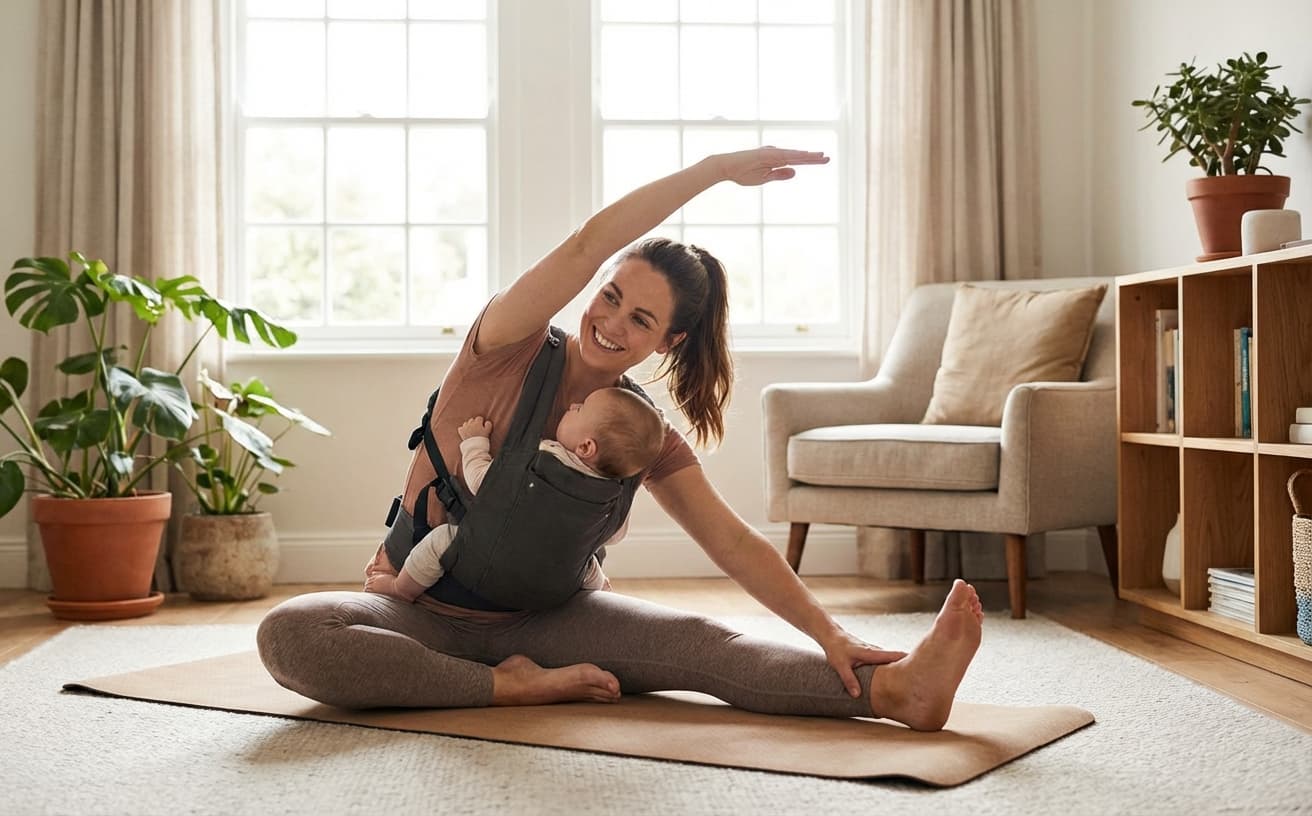
Postpartum Pelvic Floor Recovery: The Complete Guide to Healing After Birth
Why Your Pelvic Floor Needs Attention After Birth
You survived pregnancy, you made it through labor, and now you're home with your new baby. But something nobody warned you about keeps happening: a little leak when you sneeze, laugh, or pick up the car seat. Maybe it's a feeling of heaviness down below, or discomfort during activities that used to feel effortless.
You're not alone, and you're not broken. Research shows that up to 73% of women experience some form of pelvic floor dysfunction at one year postpartum. That includes urinary incontinence, pelvic pain, and other symptoms that many new moms silently accept as their "new normal."
The truth? These issues are common, but they're not something you simply have to live with. Evidence-based pelvic floor rehabilitation can make a real difference, and it's never too early or too late to start.
Understanding Your Pelvic Floor: What It Does and What Happens During Birth
Think of your pelvic floor as a hammock of muscles stretching from your pubic bone to your tailbone. This group of muscles supports your bladder, uterus, and rectum. It also plays a critical role in bladder and bowel control, core stability, and sexual function.
During pregnancy, these muscles bear the increasing weight of your growing baby for nine months. Then during vaginal delivery, they stretch dramatically to allow your baby to pass through the birth canal. Even with a cesarean birth, the months of pregnancy-related pressure take a real toll.
Common Types of Pelvic Floor Dysfunction After Birth
- Stress urinary incontinence: Leaking urine when you cough, sneeze, laugh, or exercise. Studies show this is the most common postpartum pelvic floor issue, affecting up to 35% of women at one year postpartum.
- Urge incontinence: A sudden, intense need to urinate that's hard to control
- Pelvic organ prolapse: A feeling of heaviness or pressure in the pelvis, sometimes described as feeling like something is "falling out"
- Dyspareunia: Pain during intercourse, reported by approximately 38% of postpartum women
- Fecal incontinence: Difficulty controlling bowel movements or gas
- Pelvic pain: Persistent discomfort in the pelvic region
A cross-sectional study published in PLOS One found that out of 208 women surveyed, 92.8% reported one or more symptoms of pelvic floor dysfunction during late pregnancy, with 73.6% still experiencing symptoms at one year postpartum. These numbers are striking, and they highlight just how important recovery and rehabilitation truly are.
When to Start Pelvic Floor Exercises After Birth
The good news is that gentle pelvic floor work can begin sooner than you might think. For uncomplicated vaginal deliveries, most healthcare providers say you can start gentle Kegel exercises within the first few days after birth, as long as you're comfortable and pain-free.
After a cesarean section, you may need to wait a bit longer. Your abdominal incision needs time to heal, but gentle pelvic floor contractions that don't strain your abdomen can typically begin within the first week or two.
Important Caveats
- Always get clearance from your healthcare provider, especially if you had complications, tearing, or an episiotomy
- If any exercise causes pain, stop immediately
- Start gently and build gradually. Your body just did something extraordinary, so there's no rush
The Evidence-Based Case for Pelvic Floor Muscle Training
Pelvic floor muscle training (PFMT) isn't just a nice idea. It has a Grade A recommendation from the International Consultation on Incontinence, which is the highest level of evidence-based support.
A meta-analysis reviewing 14 randomized controlled trials involving 6,454 women found that Kegel exercises significantly reduced the development of both urinary and fecal incontinence from pregnancy through the postpartum period.
Perhaps most impressively, one study showed that women who received early pelvic floor intervention had a urinary incontinence rate of just 11.4% at six weeks postpartum, compared to 44.1% in the control group that received no targeted intervention. That's a dramatic difference from a relatively simple intervention.
Research also shows that more intensive, supervised PFMT produces better results than doing exercises on your own. If possible, working with a pelvic floor physical therapist can significantly improve your outcomes.
Essential Pelvic Floor Exercises for Postpartum Recovery
Here's a progressive exercise program you can follow, starting gentle and building over time. Think of it as three phases of recovery.
Phase 1: The First 2 Weeks (Gentle Reconnection)
The goal right now isn't strength. It's simply reconnecting with your pelvic floor muscles and encouraging blood flow to support healing.
Basic Kegel (Lying Down):
- Lie on your back with knees bent and feet flat on the floor
- Take a deep breath in and let your belly and pelvic floor relax
- As you exhale, gently squeeze your pelvic floor muscles as if you're trying to stop the flow of urine
- Hold for 3 to 5 seconds while breathing normally
- Release fully and rest for 10 seconds
- Repeat 10 times, 3 times per day
Diaphragmatic Breathing:
- Lie comfortably on your back
- Place one hand on your chest and one on your belly
- Breathe in slowly through your nose, feeling your belly rise
- Exhale slowly through your mouth, feeling your belly fall
- Focus on the gentle movement of your pelvic floor: it lowers on the inhale and lifts on the exhale
- Practice for 5 minutes, twice daily
Phase 2: Weeks 2 Through 6 (Building Endurance)
Once you're comfortable with basic Kegels and can feel your pelvic floor engaging, it's time to build endurance and start integrating your core.
Seated Kegels:
- Sit on a firm chair with feet flat on the floor
- Engage your pelvic floor muscles with a gentle squeeze and lift
- Hold for 5 to 8 seconds while breathing normally
- Release fully for 10 seconds
- Repeat 10 to 12 times, 3 times per day
Heel Slides:
- Lie on your back with knees bent
- Exhale and gently engage your pelvic floor and deep abdominal muscles
- Slowly slide one heel along the floor until your leg is straight
- Inhale as you slide the heel back to the starting position
- Alternate legs for 10 repetitions on each side
Supported Marching:
- Lie on your back with knees bent
- Exhale and engage your pelvic floor
- Slowly lift one foot a few inches off the floor, keeping your knee bent
- Lower it back down with control
- Alternate sides for 10 repetitions each
Phase 3: Weeks 6 Through 12 and Beyond (Rebuilding Strength)
After your six-week postpartum checkup and with your provider's clearance, you can begin more challenging exercises that rebuild functional strength.
Bridge With Pelvic Floor Engagement:
- Lie on your back with knees bent, feet hip-width apart
- Exhale, engage your pelvic floor, and slowly lift your hips off the floor
- Hold at the top for 5 seconds, maintaining the pelvic floor contraction
- Slowly lower back down while releasing your pelvic floor
- Repeat 12 to 15 times
Modified Bird-Dog:
- Start on all fours with wrists under shoulders and knees under hips
- Exhale and engage your pelvic floor and core
- Slowly extend one arm forward while extending the opposite leg behind you
- Hold for 3 to 5 seconds, keeping your hips level
- Return to starting position and switch sides
- Repeat 8 to 10 times per side
Standing Kegels With Squats:
- Stand with feet hip-width apart
- As you lower into a squat, relax your pelvic floor
- As you stand back up, engage your pelvic floor with a squeeze and lift
- Repeat 10 to 12 times
Beyond Kegels: A Whole-Body Approach to Pelvic Floor Health
While Kegels are the foundation of pelvic floor recovery, they're not the whole picture. Your pelvic floor works as part of a team with your deep core muscles, diaphragm, and back muscles.
Posture matters. Slouching puts extra pressure on your pelvic floor. Practice sitting and standing tall, especially during breastfeeding sessions that can last a while.
Breathing matters. Holding your breath during exertion (like lifting your baby or a heavy bag) increases downward pressure on your pelvic floor. Practice exhaling during effort, a technique pelvic floor therapists call "blow before you go."
Constipation management matters. Straining on the toilet puts significant stress on your pelvic floor. Stay hydrated, eat plenty of fiber-rich foods, and consider a toilet stool to optimize your position.
Gradual return to exercise matters. High-impact activities like running, jumping, and heavy lifting should wait until at least 12 weeks postpartum, and ideally until you've built a solid pelvic floor foundation. Returning to intense exercise too quickly can worsen pelvic floor symptoms.
When to See a Pelvic Floor Physical Therapist
A pelvic floor physical therapist (PT) is a specially trained professional who can assess your pelvic floor function and create a personalized recovery plan. Consider seeing one if:
- You're experiencing any urinary or fecal leakage beyond the first few weeks postpartum
- You feel pelvic heaviness or pressure
- Intercourse is painful beyond 8 to 12 weeks postpartum
- You're unsure whether you're doing Kegels correctly (research suggests up to 30% of women perform them incorrectly)
- You had a third- or fourth-degree tear during delivery
- You want guidance before returning to running or high-impact exercise
You don't have to wait until you have a problem. Many experts now recommend that every postpartum woman see a pelvic floor PT as part of routine recovery, similar to the way you'd see a physical therapist after any major physical event.
In fact, you can see a pelvic floor PT as soon as the first few days postpartum. Early assessment can identify issues before they become chronic and set you up with an appropriate recovery timeline.
What Recovery Actually Looks Like: Setting Realistic Expectations
Pelvic floor recovery isn't a straight line. Some weeks you'll feel great, and others you might notice symptoms creeping back, especially during growth spurts when you're sleeping less and lifting more.
Most women see significant improvement within 3 to 6 months of consistent pelvic floor training. However, full recovery can take up to a year or longer, particularly after complicated deliveries or with more severe dysfunction.
Be patient with yourself. Your body grew and birthed a human being. The postpartum recovery journey takes time, and every small improvement is worth celebrating.
Frequently Asked Questions
How do I know if I'm doing Kegels correctly?
When you engage your pelvic floor correctly, you should feel a gentle squeeze and lift sensation around your vagina and anus, almost like you're trying to pick up a blueberry with those muscles. You should not feel your buttocks, inner thighs, or abdomen clenching. If you're unsure, a pelvic floor physical therapist can provide biofeedback to confirm you're activating the right muscles.
Can I do pelvic floor exercises if I had a C-section?
Yes. Even though you didn't deliver vaginally, your pelvic floor still supported the weight of your pregnancy for months. Gentle Kegels can typically begin within the first one to two weeks after a C-section, as long as they don't cause pain or strain your incision. Always check with your healthcare provider first, especially if you had complications.
Is it too late to start pelvic floor exercises if my baby is already several months old?
It's never too late. While starting early may lead to faster results, studies show that pelvic floor muscle training is effective at any point postpartum, and even years after delivery. If you're experiencing symptoms now, starting a consistent exercise routine can still bring meaningful improvement. Consider seeing a pelvic floor PT for a personalized assessment.
Will my pelvic floor ever fully recover after having a baby?
Many women regain full or near-full pelvic floor function with consistent training and appropriate care. The timeline varies based on factors like the type of delivery, degree of tearing, number of pregnancies, genetics, and how consistently you perform rehabilitation exercises. Some women may have lingering symptoms that require ongoing management, but significant improvement is achievable for the vast majority.
This article is for informational purposes only and is not medical advice. Consult your healthcare provider before making health decisions.