Rucking for Women: Why Weighted Walking Is the Hottest Fitness Trend of 2026
What Is Rucking and Why Are Women Everywhere Doing It?
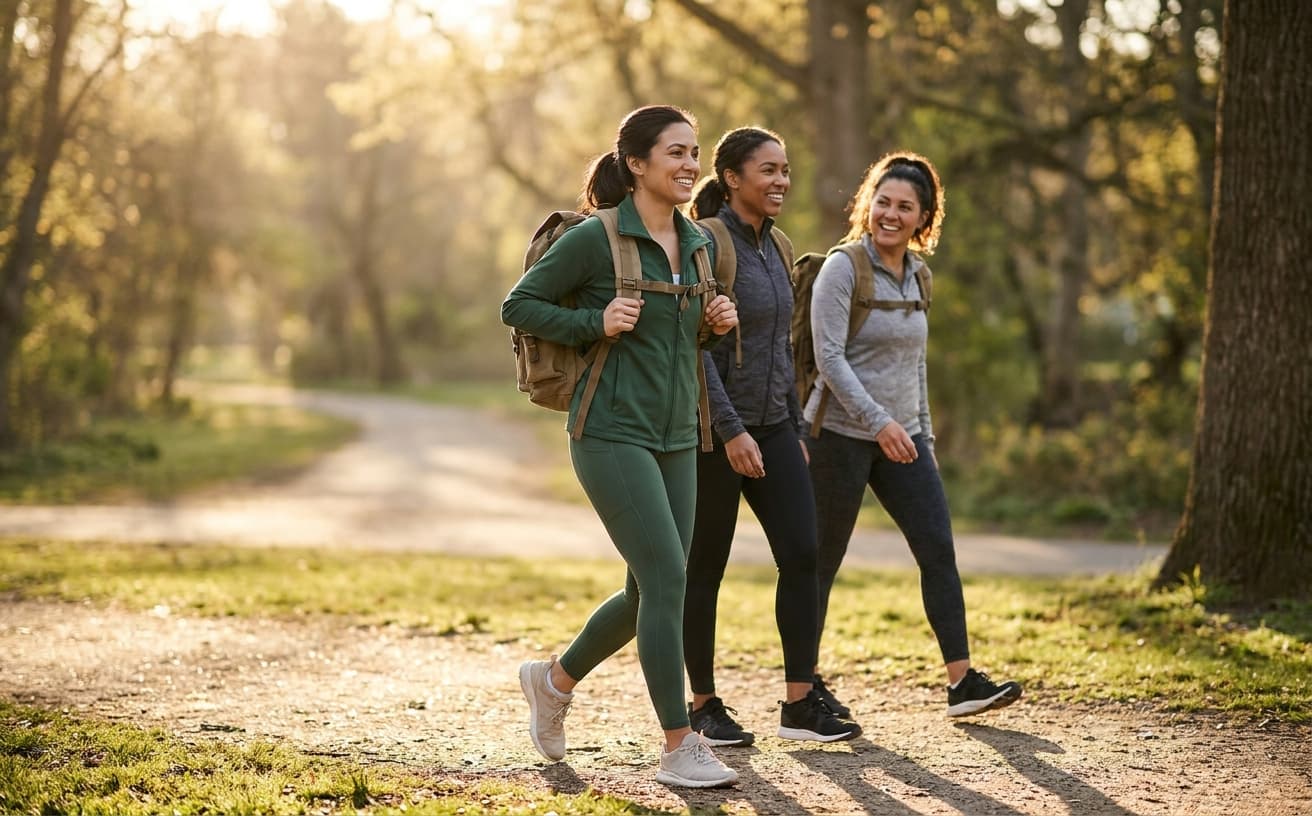
Imagine your daily walk, but supercharged. That's rucking in a nutshell — walking with a weighted backpack to turn a simple stroll into a full-body workout. And in 2026, it's officially everywhere.
The American College of Sports Medicine, National Geographic, and WebMD have all named rucking among the year's top fitness trends. What started as a military training exercise — soldiers call it "loaded marching" — has crossed over into mainstream fitness culture, and women are leading the charge.
The appeal is easy to understand. Rucking burns two to three times more calories than regular walking, builds strength without a gym membership, and is gentle enough on joints that almost anyone can do it. If you've been looking for a workout that fits into your life without requiring a complete schedule overhaul, rucking might be exactly what you need.
The Science-Backed Benefits of Rucking
Rucking isn't just a social media trend — there's genuine research supporting its health benefits. Here's what the science says:
Serious Calorie Burn Without the Pounding
Research from the Journal of Strength and Conditioning shows that rucking burns two to three times more calories than unloaded walking at the same pace. A 150-pound person carrying a 20-pound pack at a moderate pace may burn approximately 400-500 calories per hour, compared to roughly 200 calories for a regular walk.
Each additional pound you carry increases energy expenditure by approximately 4-7% above unloaded walking. That means even a relatively light pack makes a measurable difference in your calorie burn.
The best part? Rucking generates 50-60% less joint impact than running while delivering similar cardiovascular benefits. For women who find running too hard on their knees, hips, or pelvic floor, rucking offers a compelling alternative.
Cardiovascular Fitness That Builds Over Time
A study in the Journal of Strength and Conditioning Research found that participants carrying 30% of their body weight while walking at 4 mph reached 75% of their VO2 max — an intensity sufficient for meaningful cardiovascular adaptation.
Rucking naturally places your heart rate in Zone 2, the aerobic range (roughly 60-70% of your max heart rate) that builds mitochondrial density, improves fat oxidation, and strengthens your cardiovascular foundation. If you've heard about the benefits of sustained cardio for weight management, rucking delivers exactly that.
Bone Density — A Game-Changer for Women
This is where rucking really shines for women. A study in the Journal of Bone and Mineral Research found that load-bearing exercise involving forces of one to three times body weight produced the greatest bone density improvements — and rucking falls squarely in this optimal range.
A five-year study in post-menopausal women found that weighted-vest walking maintained hip bone mineral density, while the non-weighted group actually lost bone mass. For women concerned about osteoporosis — which affects one in four women over 65 — this is significant.
Bone density peaks in your 30s and gradually declines after that. Starting a weight-bearing practice like rucking earlier may help you build and maintain stronger bones for decades to come.
Posture, Core Strength, and Functional Fitness
Carrying a weighted pack engages your entire posterior chain — the muscles along your back, glutes, and hamstrings — plus your core stabilizers. Over time, this builds the kind of functional strength that makes everyday activities easier.
Think about it: carrying groceries, lifting kids, moving furniture. Rucking trains exactly the type of loaded carrying and walking your body does in real life. It's fitness that actually transfers to your daily routine.
Mental Health and Stress Reduction
Rucking combines the well-documented mental health benefits of walking outdoors with the mood-boosting effects of moderate resistance exercise. The rhythmic, meditative quality of a loaded walk — especially in nature — may help lower cortisol levels.
Lower cortisol is particularly important for women, as it supports hormone balance, sleep quality, mood regulation, and may even support healthy weight management. Many women report that rucking feels less punishing than high-intensity workouts while being more satisfying than a casual stroll.
How to Start Rucking: A Beginner's Guide for Women
One of rucking's biggest advantages is its low barrier to entry. You don't need fancy equipment, a gym membership, or athletic experience. Here's how to get started safely:
Choose Your Pack
You don't need a military-grade rucksack to start. Any sturdy backpack with padded shoulder straps and ideally a hip belt will work. The key is that the weight sits high on your back, close to your shoulder blades — not sagging down toward your lower back.
If you get serious about rucking, purpose-built ruck packs from brands like GORUCK, 5.11 Tactical, or RUKSAK are designed specifically for weighted walking and distribute the load more evenly.
Start Lighter Than You Think
The most common beginner mistake is loading too much weight too soon. Here's what experts recommend for women just starting out:
- True beginners: Start with 10 pounds or roughly 10% of your body weight — whichever is lighter.
- Active women with some fitness base: 12-15 pounds is a reasonable starting point.
- The golden rule: Never carry more than one-third of your body weight. A 150-pound woman should cap her ruck weight at 50 pounds — and that's an advanced load.
For weight, you can use actual ruck plates (flat weights designed for backpacks), dumbbells wrapped in a towel, bags of rice, or even water bottles. Just make sure the weight is secure and won't shift around inside your pack.
Master Your Form
Good posture while rucking prevents injury and maximizes benefits:
- Stand tall with your chest open and shoulders back and down — don't let the weight pull you forward.
- Engage your core as if you're bracing for a gentle push. This protects your lower back.
- Take natural strides. Don't overextend your steps. Walk at a pace where you can hold a conversation but feel your heart rate elevated.
- Keep your gaze forward, not down at your feet. Your neck should be neutral.
Build Gradually
Follow a progressive approach to avoid overuse injuries:
- Week 1-2: Start with 1-2 miles at your starting weight, two to three times per week.
- Week 3-4: Increase distance to 2-3 miles while keeping the same weight.
- Week 5-6: Add 5 pounds to your pack OR increase distance — but not both at the same time.
- Ongoing: Continue increasing weight or distance gradually. A good rule of thumb is no more than a 10% increase per week in either variable.
Rest days matter. Muscles and connective tissue need 24-48 hours to recover from loaded walking. Aim for three to four rucking sessions per week maximum, with rest days in between.
Rucking vs. Other Popular Workouts
How does rucking stack up against other exercises women commonly choose?
- Rucking vs. running: Rucking burns comparable calories with significantly less joint impact. Running still edges out rucking for pure cardiovascular intensity, but rucking adds a strength component that running lacks.
- Rucking vs. regular walking: Walking is wonderful for health, but rucking amplifies every benefit — more calories burned, more muscle engaged, greater bone density stimulus. If you already love walking for fitness, rucking is the natural next step.
- Rucking vs. strength training: Rucking builds functional strength and endurance but won't replace dedicated strength training for building significant muscle mass. The two complement each other beautifully — ruck on your cardio days, lift on your strength days.
Safety Tips and Common Mistakes to Avoid
Rucking is generally safe, but a few precautions will keep you injury-free:
- Don't skip the warm-up. Walk for five minutes without your pack or with a very light load to prepare your muscles and joints.
- Invest in good shoes. Supportive walking or trail shoes with cushioning and ankle support are essential. Running shoes are generally too flexible for loaded walking.
- Watch for hot spots. Pack straps can cause chafing on shoulders and hips. Wear moisture-wicking layers and adjust your pack if you feel rubbing.
- Stay hydrated. You'll sweat more than during a regular walk. Bring water, and consider electrolytes for longer rucks, especially in warm weather.
- Listen to your body. Sharp pain — especially in your lower back, knees, or shoulders — means you need to reduce weight, slow down, or stop. Muscle fatigue is normal; joint pain is not.
- Mind the terrain. Start on flat, even surfaces. Uneven trails with a heavy pack challenge your balance and increase ankle injury risk until you build stability.
Why Rucking Resonates With Women Right Now
There's a reason rucking has struck a chord beyond just the fitness benefits. More women in 2026 are choosing movement that supports longevity, body confidence, hormone balance, and daily energy over workouts that leave them drained and sore.
Rucking fits that philosophy perfectly. It's accessible, adaptable, social (ruck clubs are popping up everywhere), and effective without being extreme. You can ruck with your kids in the stroller, with your dog, with friends, or solo with a podcast.
It's exercise that meets you where you are — whether you're a new mom rebuilding fitness, a busy professional squeezing in movement, or someone approaching menopause who wants to protect bone health and cardiovascular fitness for the long haul.
Frequently Asked Questions
How much weight should a beginner woman carry when rucking?
Start with 10 pounds or approximately 10% of your body weight, whichever is lighter. Women with an existing fitness base may begin with 12-15 pounds. The important thing is to start conservatively and increase gradually — no more than 5 pounds at a time, and never exceed one-third of your body weight. It's better to ruck consistently with a lighter load than to overdo it and get injured.
Is rucking safe during pregnancy or postpartum?
If you were rucking before pregnancy, you may be able to continue with a lighter load during the first and second trimesters — but always get clearance from your healthcare provider first. During the postpartum period, wait until you've been cleared for exercise (typically six weeks for vaginal delivery, eight weeks for cesarean) and start with unloaded walking before gradually adding weight. Pelvic floor recovery should be your priority before adding resistance.
Can rucking really help with weight loss?
Rucking may support weight loss as part of an overall healthy lifestyle. Research shows it burns two to three times more calories than regular walking, which can contribute to a calorie deficit when combined with balanced nutrition. However, it's important to set realistic expectations — with beginner-friendly loads of 10-15 pounds, the realistic calorie increase over regular walking is around 10-20%. Consistency over time matters more than any single workout.
How often should I ruck each week for best results?
For most women, three to four sessions per week with rest days in between provides the best balance of results and recovery. Your muscles and connective tissue need 24-48 hours to recover from loaded walking. Beginners may want to start with two sessions per week and build up. On non-rucking days, regular walking, stretching, or light strength training makes a great complement.
This article is for informational purposes only and is not medical advice. Consult your healthcare provider before making health decisions.