Pilates for Women: A Complete Beginner's Guide to the World's Most Popular Workout
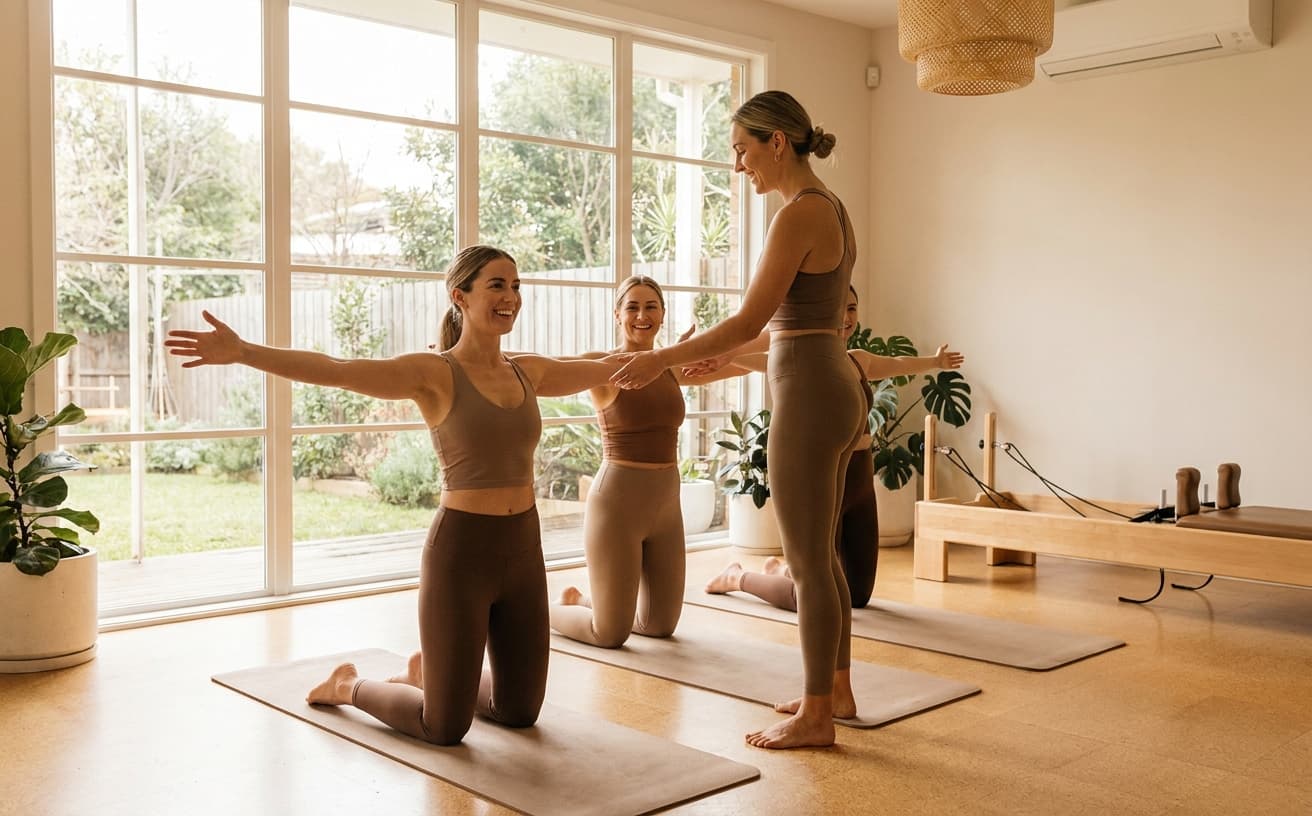
Why Pilates Is the Workout of the Moment
If it seems like everyone you know is doing Pilates, you're not imagining things. Pilates has been the most-booked workout globally for the third year in a row, with bookings surging 66% since 2024. And this isn't just a passing trend. There's real science behind why this century-old exercise method is resonating with so many women in 2026.
Whether you're 25 or 65, postpartum or perimenopausal, a total beginner or a lifelong athlete, Pilates offers something that very few other workouts can: a system designed to support your body for decades. That's why it fits so naturally into the bigger conversations happening right now around longevity, sustainable fitness, and exercising for how you feel rather than just how you look.
Let's dive into everything you need to know about getting started.
What Exactly Is Pilates?
Pilates is a low-impact exercise method developed in the early 20th century by Joseph Pilates. It focuses on controlled, precise movements that strengthen the core, improve flexibility, and build body awareness. Unlike many other workouts, Pilates emphasizes quality of movement over quantity of reps.
The method is built on six core principles:
- Concentration — focusing your mind on each movement
- Control — performing exercises with intention, not momentum
- Centering — engaging your core (the "powerhouse") as the foundation
- Flow — moving smoothly between exercises
- Precision — prioritizing correct form over speed
- Breathing — coordinating breath with movement
This mind-body connection is a big part of what makes Pilates feel different from other workouts. You're not just going through the motions. You're actively engaged in every single movement.
The Top Benefits of Pilates for Women
Research and real-world results consistently show that Pilates delivers a wide range of benefits that are especially relevant for women across all life stages.
Core Strength That Goes Beyond Abs
When people talk about Pilates and core strength, they're not just talking about getting a flat stomach. Your core includes your deep abdominal muscles, pelvic floor, back muscles, and diaphragm. Pilates targets all of these, creating a strong, stable center that supports everything from good posture to pain-free daily movement.
Studies show that people who practice Pilates see significant increases in core strength in as little as four weeks. That deep core activation is particularly beneficial for women dealing with postpartum recovery, lower back pain, or desk-job posture issues.
Bone Health and Osteoporosis Prevention
Women are more prone to osteoporosis due to lower bone density and hormonal changes during menopause. A systematic review analyzing 591 participants found that while Pilates may not dramatically increase bone mineral density, it may help maintain bone density during the postmenopausal years when loss would normally be expected.
That's a meaningful finding. Maintaining bone density after menopause, when it would otherwise decline, is a protective benefit that shouldn't be overlooked. Reformer Pilates in particular provides resistance training that supports bone health through weight-bearing and muscular load.
Improved Flexibility and Balance
Regular Pilates practice is associated with significant improvements in functional autonomy, balance, flexibility, and muscle strength. Research on older women found that Pilates participants showed meaningful improvements in balance, walking speed, and leg strength.
Better balance doesn't just mean you can stand on one leg longer. It means a reduced risk of falls, which is one of the most important factors in long-term health and independence as you age.
Stress Reduction and Mental Health
Unlike high-intensity workouts that can spike cortisol (your stress hormone), Pilates activates the parasympathetic nervous system, which is responsible for relaxation and calm. The combination of controlled breathing, precise movements, and mindfulness creates what many practitioners describe as a moving meditation.
This makes Pilates especially appealing if you're dealing with stress, anxiety, or the mental load that comes with juggling work, family, and everything else. You walk out of class feeling both stronger and calmer.
Posture and Pain Relief
If you spend hours at a desk, Pilates may be exactly what your body needs. The method systematically strengthens the muscles that support good alignment while stretching the ones that get tight from sitting. Many women report significant improvements in chronic neck pain, shoulder tension, and lower back discomfort after starting a regular Pilates practice.
Pilates for Every Life Stage
One of the things that makes Pilates stand out is how well it adapts to wherever you are in life.
During Pregnancy
Prenatal Pilates can help maintain core strength, reduce back pain, and prepare the pelvic floor for labor and delivery. Many exercises can be modified for each trimester. Always work with an instructor who's certified in prenatal Pilates, and get clearance from your healthcare provider first.
Postpartum Recovery
Pilates offers gentle postpartum exercises that help new mothers regain core strength, alleviate lower back pain, and encourage healthy movement patterns. It's one of the safest ways to rebuild strength after childbirth, particularly for the pelvic floor and deep abdominals.
Perimenopause and Menopause
As more women enter midlife — with over 47 million transitioning into menopause annually worldwide — Pilates addresses many of the specific challenges this stage brings. From bone health protection to joint-friendly movement to stress management, it's a workout that meets you exactly where you are.
Types of Pilates: Finding Your Fit
Not all Pilates classes are created equal. Here's what you need to know about the main types:
Mat Pilates
This is performed on a mat using your body weight for resistance. It's the most accessible form of Pilates, requiring minimal equipment. Mat Pilates is generally less expensive and excellent for building foundational movement patterns. It's a great starting point for complete beginners.
Reformer Pilates
Reformer classes use a specialized machine with adjustable springs, straps, and a sliding carriage. The springs provide variable resistance, making exercises both more challenging and more supportive depending on the setting. Reformer Pilates is more adjustable and can accommodate a wider range of fitness levels and physical limitations.
Clinical Pilates
This is practiced under the guidance of a physiotherapist and is often prescribed for rehabilitation, injury prevention, or specific musculoskeletal conditions. If you're dealing with a particular injury or chronic pain, clinical Pilates may be the best place to start.
Contemporary Pilates
This approach incorporates modern exercise science and biomechanics into the traditional Pilates method. It may use additional equipment like resistance bands, foam rollers, and stability balls alongside traditional Pilates exercises.
How to Get Started as a Complete Beginner
Starting something new can feel intimidating, but Pilates is genuinely one of the most beginner-friendly workouts out there. Here's your game plan:
- Start with a beginner class. Both mat and reformer classes offer beginner-level options that focus on teaching proper form and technique. Don't jump into an advanced class on day one.
- Wear comfortable, fitted clothing. Loose clothes can get in the way and make it harder for your instructor to check your alignment. Leggings and a fitted top work perfectly.
- Go barefoot or wear grip socks. Most Pilates studios ask you to remove your shoes. Grip socks with non-slip bottoms are a popular option.
- Communicate with your instructor. Tell them about any injuries, limitations, or pregnancy. Good instructors will offer modifications so you can participate safely.
- Be patient with yourself. Pilates is harder than it looks. Those small, controlled movements can be surprisingly challenging. Give yourself at least five to six sessions before deciding if it's right for you.
- Aim for consistency. Two to three sessions per week is ideal for seeing results. Even once a week is better than nothing.
What to Expect in Your First Class
Walking into your first Pilates class, here's what you can expect:
The class will likely begin with a warm-up focused on breathing and gentle movements to activate your core. You'll then move through a series of exercises targeting different muscle groups, with an emphasis on the core, glutes, and back. Your instructor will cue you on breathing patterns, alignment, and muscle engagement throughout.
Don't be surprised if the movements feel small and subtle. That's by design. In Pilates, less is often more. You're training your body to move with precision and control, and that takes concentration.
Most classes last 45 to 60 minutes. You might feel muscles you didn't know you had the next day, particularly in your deep core and inner thighs. That's completely normal.
Pilates vs. Other Popular Workouts
How does Pilates compare to other workout options?
- Pilates vs. Yoga: Both emphasize mind-body connection, but Pilates focuses more on core strength and muscular control, while yoga leans more toward flexibility and spiritual practice. Pilates may provide slightly more bone-loading benefit due to higher muscular load.
- Pilates vs. Weight Training: Strength training builds muscle mass more effectively, but Pilates develops functional strength, flexibility, and body awareness that complements weight training beautifully. Many fitness experts recommend doing both.
- Pilates vs. HIIT: High-intensity interval training burns more calories per session, but Pilates is easier on joints and may be more sustainable long-term. Pilates also activates the parasympathetic nervous system rather than spiking cortisol.
The Bottom Line
Pilates isn't a fad. It's a scientifically supported exercise method that builds strength, improves flexibility, protects bone health, and reduces stress. It adapts to every life stage, from pregnancy to menopause and beyond. And with options ranging from affordable mat classes to specialized reformer studios, there's a way to practice that fits almost every budget and schedule.
The fact that it's the most popular workout in the world right now isn't just about trends. It's because Pilates delivers real results that women can feel in their daily lives — standing taller, moving easier, breathing deeper, and feeling stronger from the inside out.
Frequently Asked Questions
How often should I do Pilates to see results?
Most experts recommend two to three sessions per week for noticeable improvements in strength, flexibility, and posture. Research shows that significant core strength gains can appear in as little as four weeks of consistent practice. Even one session per week may provide benefits, though progress will be slower.
Is Pilates enough exercise on its own, or do I need to do other workouts too?
Pilates is excellent for core strength, flexibility, and body awareness, but it may not provide enough cardiovascular challenge on its own. For overall health, consider combining Pilates with some form of cardio like walking, swimming, or cycling. That said, many women find Pilates to be a complete workout when combined with an active daily lifestyle.
Can Pilates help with weight loss?
Pilates alone may not burn as many calories as high-intensity workouts, but it supports weight management in important ways. It builds lean muscle mass, which increases your resting metabolic rate. It also improves body awareness, which may help you make better food choices. Combined with a balanced diet, Pilates can be a valuable part of a weight management plan.
Is Pilates safe if I have back pain or joint problems?
Pilates is generally considered one of the safer exercise options for people with back pain or joint issues, because it's low-impact and emphasizes controlled movement. In fact, many physical therapists prescribe clinical Pilates for rehabilitation. However, you should always consult your doctor first and work with a qualified instructor who can modify exercises for your specific condition.
This article is for informational purposes only and is not medical advice. Consult your healthcare provider before making health decisions.