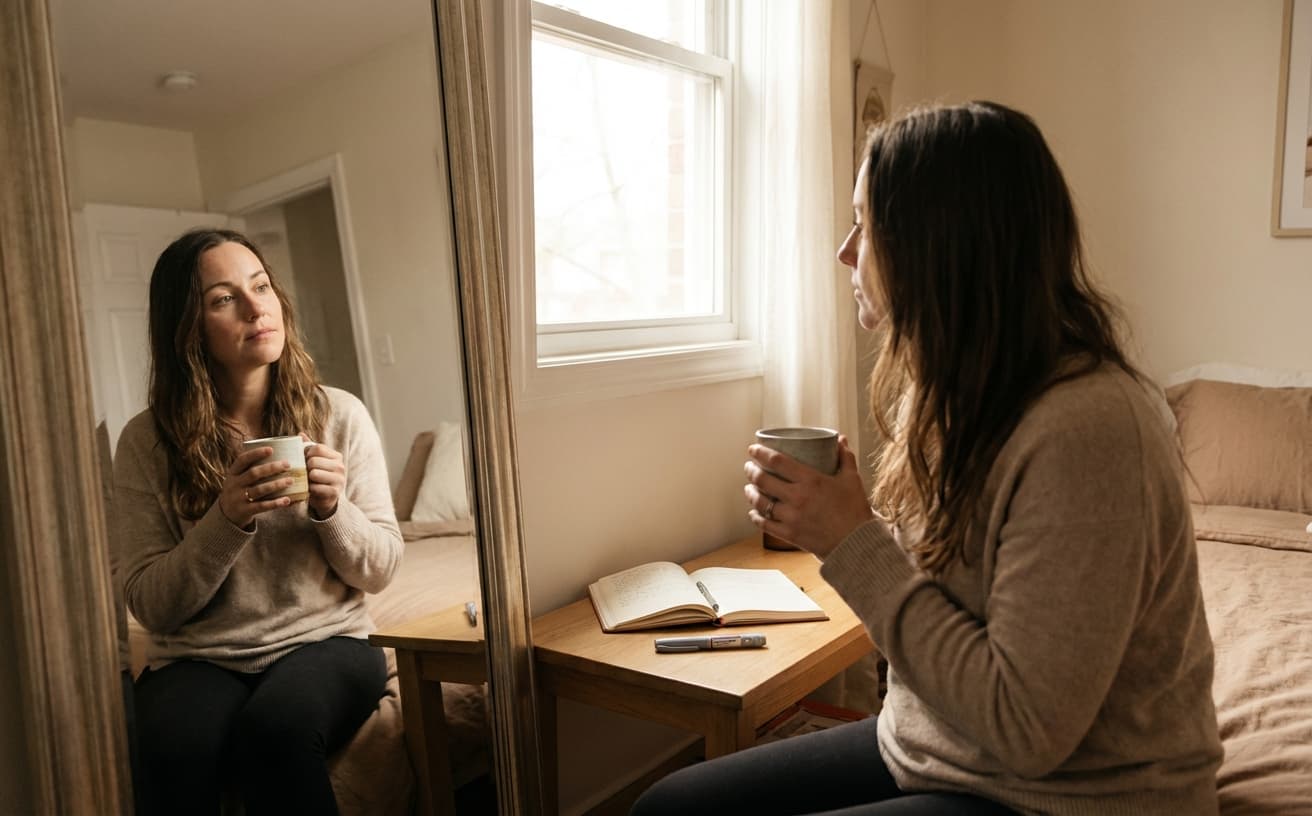
Body Image After Pregnancy: How to Make Peace With Your Postpartum Body

Why Body Image After Pregnancy Is So Hard (And Why It's Not Your Fault)
Growing and delivering a baby is one of the most physically demanding things a human body can do. And yet, many new moms find themselves standing in front of the mirror a few weeks postpartum wondering why they don't feel proud of what they see.
If that sounds familiar, here's something important to know: you are not alone, and there is nothing wrong with you. Research shows that 52% of pregnant participants and 56.2% of postpartum participants reported body image dissatisfaction. That means more than half of new moms are quietly struggling with the same feelings.
Body dissatisfaction after pregnancy is incredibly common, and a big reason why comes down to unrealistic cultural expectations and social comparison. From celebrity "bounce-back" stories to filtered photos on social media, the pressure to snap back quickly after having a baby is everywhere — and it is not rooted in reality.
This article is here to offer something different: honest, warm, and research-backed guidance on navigating body image during one of the most transformative seasons of your life.
The Real Story Behind Postpartum Body Changes
Your body spent roughly nine months stretching, shifting, and reorganizing itself to support another human life. After birth, it continues to change — sometimes for months or even years. These changes are not signs that something went wrong. They are signs that something profound happened.
What Your Body Actually Went Through
Here are just some of the physical shifts that happen during and after pregnancy:
- Skin stretching: Stretch marks appear when skin expands faster than its underlying tissue can keep up. They are incredibly common and completely normal.
- Weight changes: Your body stores extra fat during pregnancy as a biological survival mechanism. That fat does not disappear overnight — nor should it have to.
- Abdominal separation: Many people develop diastasis recti, a separation of the abdominal muscles, which can change the shape of the belly even after the baby arrives.
- Scars: C-section scars are permanent reminders of a major surgery. Perineal tears and episiotomy scars are equally real.
- Cellulite and texture changes: Hormonal shifts during and after pregnancy can affect skin texture in ways that are often permanent.
None of these things are failures. They are evidence that your body did exactly what it was supposed to do. Reframing stretch marks, scars, cellulite, and weight changes as signs your body is transforming — not breaking down — is one of the most powerful shifts you can make.
For more on supporting your body after birth, explore our guides on postpartum recovery and nutrition/\">postpartum nutrition.
Body Image After Pregnancy and the Role of Culture
It would be nice if the difficulty of postpartum body image were purely internal — something you could fix with a positive affirmation or two. But the truth is, culture plays a massive role in how new moms see themselves.
The "Bounce-Back" Myth
Social media, magazines, and celebrity culture have created a damaging narrative: that a "good" mom — or a "motivated" woman — will quickly return to her pre-pregnancy body. This myth is not only unrealistic, it is also actively harmful.
The human body typically takes at minimum 12 months to a year or more to recover from pregnancy and childbirth. For many people, certain changes are permanent — and that is okay. The problem is not your body. The problem is the impossible standard being held up as normal.
Social Comparison and Its Toll
When you scroll through photos of new moms who appear to have "bounced back" in weeks, your brain does not automatically account for professional lighting, photo editing, or the fact that those images represent an extreme outlier. What it does is compare — and that comparison tends to make most of us feel worse about ourselves.
Research consistently links social comparison to higher rates of body dissatisfaction. Limiting the amount of time you spend consuming content that makes you feel bad about your body is not vanity — it is self-protection.
How to Practice Self-Compassion for Your Postpartum Body
Self-compassion is one of the most research-supported tools for improving body image, and it is especially important during the postpartum period. But what does it actually look like in practice?
Respond With Kindness, Not Criticism
Self-compassion means responding to your own struggles and imperfections the way you would respond to a close friend going through the same thing. If your best friend told you she hated her postpartum body, you would not say, "Yeah, you're right — you should have lost that weight by now." You would be warm, understanding, and realistic.
Try to extend that same kindness to yourself. When a critical thought about your body arises, pause and ask: "Would I say this to someone I love?" If the answer is no, it is worth rewriting the script.
Allow Yourself to Feel Without Judgment
Self-compassion is not about forcing yourself to feel positive. It is about allowing yourself to feel whatever is true — including sadness, frustration, or grief about your changing body — without layering on shame or judgment.
Grief over the body you had before pregnancy is a real and valid experience. You can acknowledge that and still move toward acceptance. The two are not mutually exclusive.
Shifting From Appearance to Function: A Game-Changer for Body Image After Pregnancy
One of the most effective ways to improve body image after pregnancy is to shift your focus from what your body looks like to what your body can do. This is sometimes called functional body appreciation, and research suggests it may be particularly helpful for postpartum women.
What Your Body Is Capable Of Right Now
Think about it for a moment. Your body:
- Carried and grew a human being
- Delivered that baby — whether vaginally or via major surgery
- Is producing milk, if you are breastfeeding (which burns hundreds of calories a day, by the way)
- Is healing from the inside out
- Is keeping you and your baby alive, every single day
Focus on what your body can do rather than how it looks. This does not mean you have to pretend you love every change. It just means you are expanding the lens you use to evaluate yourself.
Movement as Empowerment, Not Punishment
Gentle movement can be a powerful tool for rebuilding your relationship with your body — but the key word is "gentle," and the key intention is empowerment, not punishment.
Walking, yoga, and low-impact strength training are all excellent options for postpartum movement. They can help restore endurance, improve mood through the release of endorphins, and help you feel more at home in your body again. The goal is not to "get your body back" — it is to feel capable and energized.
Always check with your healthcare provider before starting any postpartum exercise routine. For more guidance, visit our fitness routines/\">fitness section.
Practical Strategies for Everyday Body Image Support
Sometimes the most meaningful changes are the small, everyday ones. Here are a few practical steps that many postpartum moms find genuinely helpful.
Wear Clothes That Actually Fit
This one sounds simple, but it makes a real difference. Wearing clothes that are too tight — in an attempt to "motivate" yourself or avoid buying a new size — tends to make you feel worse throughout the day.
Wearing comfortable, well-fitting clothing is not "giving up." It is meeting yourself with realism and kindness. You deserve to feel comfortable in what you are wearing right now, not only once you reach some future version of yourself.
Build Community With Other Moms
Isolation makes body image struggles worse. When you feel like you are the only one struggling, the shame compounds. But the truth is that other moms feel the same way — and sharing those experiences can be genuinely healing.
Find your people. Whether that is a local new moms group, an online community, or a close friend who recently had a baby, talking openly about body image after pregnancy can dissolve a lot of the shame around it. You may find that saying "I'm struggling with how my body looks right now" is met with a flood of "me too."
Curate Your Social Media Feed
Unfollow accounts that make you feel bad about your body. Follow accounts that show real, unedited postpartum bodies and celebrate what they can do. The content you consume daily shapes how you see yourself more than you might realize.
When to Seek Professional Support
Sometimes body image struggles after pregnancy go deeper than everyday tips can address. If you find that negative thoughts about your body are consuming significant amounts of your mental energy, affecting your relationships, or contributing to disordered eating behaviors, it may be time to reach out for professional support.
What Therapy Can Offer
Therapy provides a safe space to explore the deeper roots of body image struggles — including things like past trauma, perfectionism, or cultural pressure that may have been present long before pregnancy. A therapist who specializes in postpartum mental health or body image can help you develop personalized tools for healing.
Cognitive behavioral therapy (CBT) and acceptance and commitment therapy (ACT) are two approaches that have shown promise for body image concerns, though it is worth discussing options with a mental health professional to find what is right for you.
Postpartum Depression and Body Image
It is also worth noting that body image dissatisfaction can be connected to postpartum depression and anxiety. If you are experiencing persistent low mood, overwhelming anxiety, or other symptoms beyond body image concerns, please reach out to your healthcare provider. You do not have to navigate that alone.
Our guide to postpartum wellness has more information on recognizing when professional support may be helpful.
A Note on "Getting Your Body Back"
You will hear this phrase constantly as a new mom: "Are you trying to get your body back?" Here is a reframe worth holding onto: your body never left.
It changed. It did something extraordinary. And now it is here with you, doing its best every single day while you navigate one of the biggest transitions of your life. That body deserves care and compassion — not a frantic effort to erase what it went through.
Body image after pregnancy is a journey, not a destination. Some days will feel harder than others. And on those hard days, the most radical thing you can do is respond to yourself with the same gentleness you would offer to any new mom you love.
Frequently Asked Questions
How long does it take to feel comfortable in your body after pregnancy?
There is no universal timeline — every body and every person is different. Physical recovery from childbirth typically takes several months to over a year, and emotional adjustment to body changes can take even longer. Research suggests that postpartum body image can continue to shift well into the first two years after birth. Be patient with yourself, and know that gradual improvement is both common and possible.
Is it normal to feel worse about your body after pregnancy than before?
Yes, it is very common. Studies show that more than half of postpartum women report body image dissatisfaction. Much of this is driven by the gap between unrealistic cultural expectations — like the "bounce-back" narrative — and the reality of postpartum physical change. If you are struggling, you are in good company, and there are real strategies that can help.
Can exercise help with body image after pregnancy?
Gentle, intentional movement can support both physical recovery and emotional wellbeing after pregnancy. Walking, yoga, and low-impact strength training may help you feel more connected to and empowered by your body. However, exercise is most helpful for body image when approached as a form of self-care rather than punishment or a means to "fix" your appearance. Always get clearance from your healthcare provider before returning to exercise postpartum.
When should I seek help for postpartum body image concerns?
If negative thoughts about your body are significantly affecting your daily life, relationships, or eating habits, it is worth speaking with a mental health professional. Therapy can help you explore the roots of body image struggles and develop personalized tools for healing. If you are also experiencing symptoms of postpartum depression or anxiety, please reach out to your healthcare provider as soon as possible — support is available.
This article is for informational purposes only and is not medical advice. Consult your healthcare provider before making health decisions.