Continuous Glucose Monitors and Your Diet: What Healthy People Need to Know in 2026
Why Everyone Is Talking About Continuous Glucose Monitors
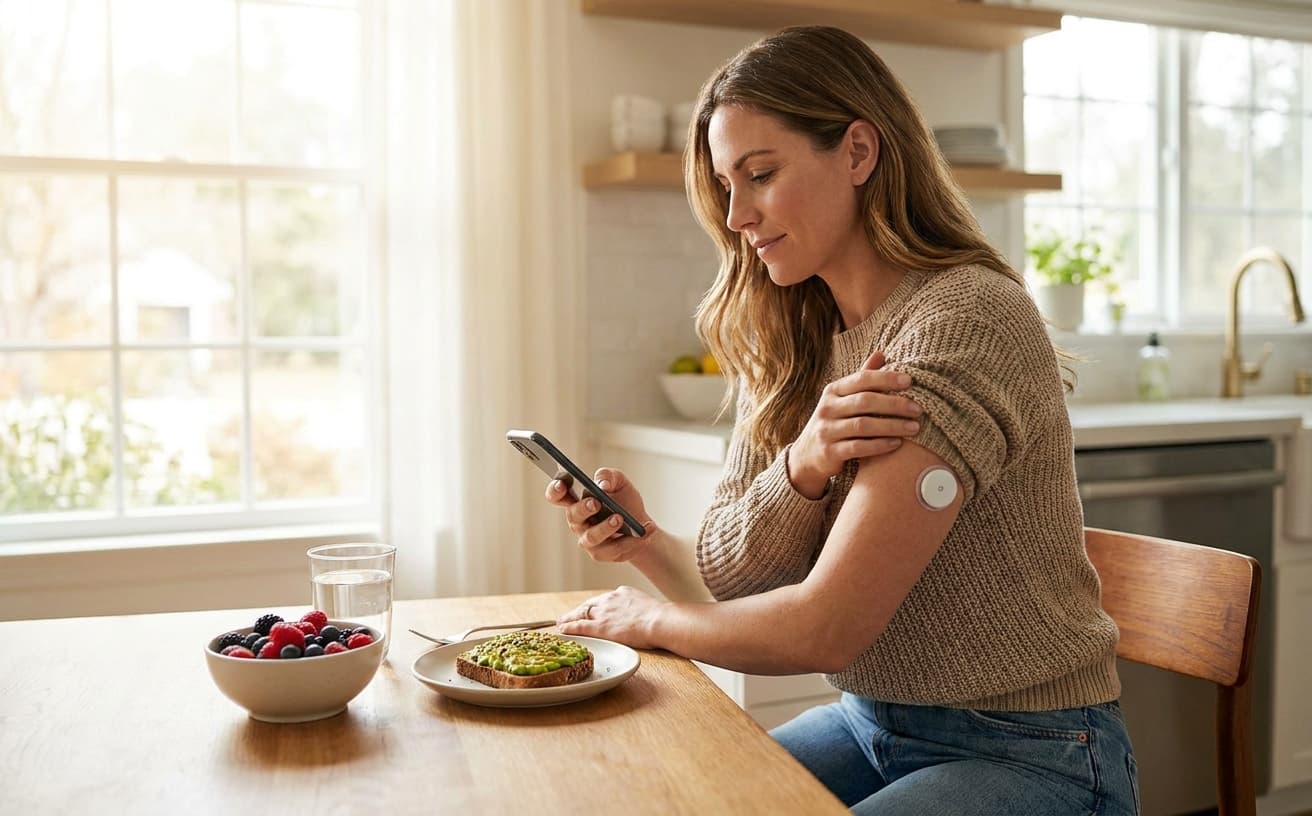
Walk into any wellness-focused gym or scroll through your social media feed, and you'll likely spot a small, coin-sized sensor stuck to someone's upper arm. That little device is a continuous glucose monitor (CGM), and it's become one of the most talked-about health tools of 2026.
Once reserved strictly for people managing diabetes, CGMs have crossed over into the mainstream wellness world. Millions of healthy adults are now wearing them to track how their bodies respond to food, exercise, and stress in real time. But is this trend actually backed by science, or is it just another wellness fad?
Let's break down what CGMs do, what the research says, and whether one might actually help you eat smarter and feel better.
What Is a Continuous Glucose Monitor and How Does It Work?
A CGM is a small wearable device that measures your blood sugar (glucose) levels continuously throughout the day and night. A tiny sensor inserted just beneath the skin reads glucose levels in your interstitial fluid, which is the fluid between your cells.
The sensor sends data to an app on your phone, giving you a real-time picture of your glucose levels. You can see your numbers as a flowing line graph, watching how they rise after meals and fall during exercise or rest.
Key Things a CGM Tracks
- Glucose spikes: How high your blood sugar rises after eating
- Glucose dips: Drops in blood sugar that may leave you feeling tired or hungry
- Time in range: How long your glucose stays within a healthy zone throughout the day
- Overnight patterns: What your blood sugar does while you sleep
Most modern CGMs are about the size of two stacked quarters and can be worn for 10 to 14 days before needing replacement. The application process takes seconds and is virtually painless.
The Science Behind CGMs and Food Response
Here's the fascinating part: two people can eat the exact same food and have completely different glucose responses. This isn't just anecdotal. Research published in scientific journals has confirmed that individual glucose responses to identical foods vary dramatically from person to person.
A landmark study found that factors like your gut microbiome, sleep quality, stress levels, and even the order in which you eat foods at a meal all influence how your blood sugar responds. This means the "healthy" foods you've been told to eat may actually cause significant glucose spikes for you, while foods you've been avoiding might be perfectly fine.
What Research Shows About CGMs in Healthy Adults
A 2026 study published in Nature Communications examined associations between CGM-derived glucose metrics and diet, lifestyle, and demographics. The researchers found that continuous glucose metrics capture meaningful components of metabolic health even in people without diabetes.
Another exploratory clinical trial, the CGM-HYPE study, measured individual glucose responses to diet, exercise, and stress in healthy young adults. The findings revealed that high carbohydrate loads led to the highest glucose peaks, and stress caused glucose to rise significantly compared to control settings.
However, researchers also note that longer-term outcome studies are still needed to fully establish whether CGM use leads to lasting health improvements in non-diabetic individuals.
How a CGM May Help You Make Better Food Choices
Even without long-term outcome data, many nutrition experts see value in the real-time feedback CGMs provide. Here's how that data may help you eat smarter.
Identifying Your Personal Trigger Foods
You might discover that white rice sends your glucose soaring while sweet potatoes barely cause a blip. Or that your morning oatmeal causes a bigger spike than you expected. A CGM shows you your unique response, not just what a generic food chart predicts.
Understanding Meal Composition
CGM data often reveals that pairing carbohydrates with protein, healthy fats, or fiber can dramatically flatten your glucose curve. Many users discover that eating a salad before their pasta, rather than after, keeps their blood sugar significantly more stable.
Optimizing Meal Timing
Some people find their glucose tolerance is much better in the morning than at night, supporting the concept of metabolic eating patterns. A CGM can help you figure out when your body handles carbohydrates most efficiently.
Connecting Food to Energy and Mood
Those afternoon energy crashes? They may line up perfectly with glucose dips on your CGM. Seeing the connection between what you eat and how you feel can be a powerful motivator for making sustainable dietary changes.
What CGMs Cannot Tell You
For all their promise, continuous glucose monitors have real limitations that are worth understanding before you invest in one.
Blood sugar is just one marker of metabolic health. A CGM won't tell you about your cholesterol levels, inflammation markers, nutrient deficiencies, or hormonal balance. Focusing exclusively on glucose can give you an incomplete picture of your overall health.
CGMs also don't measure insulin levels, which are a critical part of the metabolic equation. You can have normal glucose readings while your body is producing excess insulin to keep them that way, a pattern that a CGM alone won't detect.
The Risk of Glucose Obsession
Health experts have raised concerns about CGMs fueling unhealthy fixation on food and numbers. For people prone to disordered eating or health anxiety, constantly monitoring glucose data may do more harm than good.
A 2026 analysis cautioned that frequent exposure to glucose data may promote unhealthy fixation on minor blood sugar fluctuations in people without diabetes. Small, normal variations in glucose levels can be misinterpreted as problems when they're actually completely healthy responses.
If you have a history of disordered eating or body image concerns, it's worth discussing CGM use with a healthcare provider before diving in.
Who May Benefit Most From Wearing a CGM
While CGMs aren't necessary for everyone, certain groups of healthy people may find them particularly useful.
- People with prediabetes: If your fasting glucose or A1C is borderline, a CGM can help you understand which foods and habits keep your blood sugar stable
- Those with a family history of type 2 diabetes: Real-time feedback may motivate preventive lifestyle changes
- Athletes and fitness enthusiasts: Understanding how glucose responds to different fueling strategies can help optimize performance and recovery
- People struggling with energy crashes: If you experience regular afternoon slumps or brain fog, a CGM may reveal dietary patterns behind the problem
- Curious self-optimizers: If you love data and want to fine-tune your nutrition, a short-term CGM trial can provide actionable insights
Most nutrition experts suggest that for the general population, a two-to-four-week CGM trial may be more practical than continuous long-term use. This gives you enough data to identify patterns and make adjustments without the ongoing cost or potential for over-monitoring.
How to Get the Most Out of a CGM
If you decide to try a CGM, these strategies will help you get the most useful data.
Keep a Food Journal Alongside Your CGM
The CGM shows you the glucose response, but it doesn't know what you ate. Logging your meals, even briefly, helps you connect specific foods and combinations to your glucose patterns.
Test One Variable at a Time
Want to know if adding avocado to your toast changes your glucose response? Eat the toast alone one day and with avocado the next, keeping everything else the same. Controlled experiments give you the clearest answers.
Pay Attention to More Than Just Spikes
Focus on the full picture: how quickly your glucose rises, how high it goes, how fast it returns to baseline, and what your overall time in range looks like throughout the day. A single spike doesn't define your metabolic health.
Don't Fear Normal Glucose Responses
Your blood sugar is supposed to rise after eating. That's normal physiology. A healthy glucose response means your levels rise moderately after meals and return to baseline within about two hours. Not every rise is a red flag.
Work With a Professional
A registered dietitian or nutrition-focused healthcare provider can help you interpret your CGM data in context, avoiding the trap of over-analyzing every fluctuation.
The Cost Factor: Are CGMs Worth the Investment?
For people without diabetes, CGMs are typically an out-of-pocket expense. Over-the-counter devices have become more accessible in 2026, with several brands now offering direct-to-consumer options without a prescription.
Prices vary, but most CGM systems cost between $75 and $200 per month depending on the brand and subscription model. Some wellness-focused CGM programs include dietitian consultations and app-based insights for an additional fee.
For many people, a short-term trial of two to four weeks may provide enough insights to justify the cost, especially when combined with guidance from a nutrition professional.
The Bottom Line on CGMs for Healthy People
Continuous glucose monitors offer a genuinely fascinating window into your body's metabolic responses. The technology has advanced rapidly, and the personalized data can reveal surprising truths about how your body handles different foods.
That said, a CGM is a tool, not a magic solution. The fundamentals of healthy eating haven't changed: eat plenty of vegetables, prioritize fiber and protein, minimize ultra-processed foods, and pay attention to how foods make you feel.
For the right person, a short-term CGM experiment can provide valuable, actionable insights. For others, simply focusing on whole foods, balanced meals, and consistent eating patterns may deliver the same benefits without the gadget.
Frequently Asked Questions
Do I need a prescription to get a CGM in 2026?
Not necessarily. Several companies now offer over-the-counter CGM devices that don't require a prescription. However, prescription CGMs prescribed by your doctor may be covered by insurance if you have diabetes or prediabetes. Over-the-counter options for general wellness use are typically paid out of pocket.
Can a CGM help me lose weight?
A CGM alone won't cause weight loss, but it may support your weight management efforts by helping you identify foods that keep your blood sugar stable and your hunger in check. Stable glucose levels are associated with fewer cravings and more consistent energy, which may make it easier to stick with a healthy eating plan.
Are there any risks to wearing a CGM as a healthy person?
Physical risks are minimal. Some people experience minor skin irritation at the sensor site. The bigger concern is psychological: some individuals may develop an unhealthy preoccupation with their glucose numbers, leading to unnecessary food restriction or anxiety. If you notice this happening, it's best to take a break and consult a healthcare provider.
How long should I wear a CGM to get useful data?
Most experts suggest a minimum of two weeks to identify meaningful patterns. A four-week trial gives you even more data, especially if you experiment with different foods and meal timing during that period. Long-term continuous use is generally not considered necessary for healthy individuals.
This article is for informational purposes only and is not medical advice. Consult your healthcare provider before making health decisions.